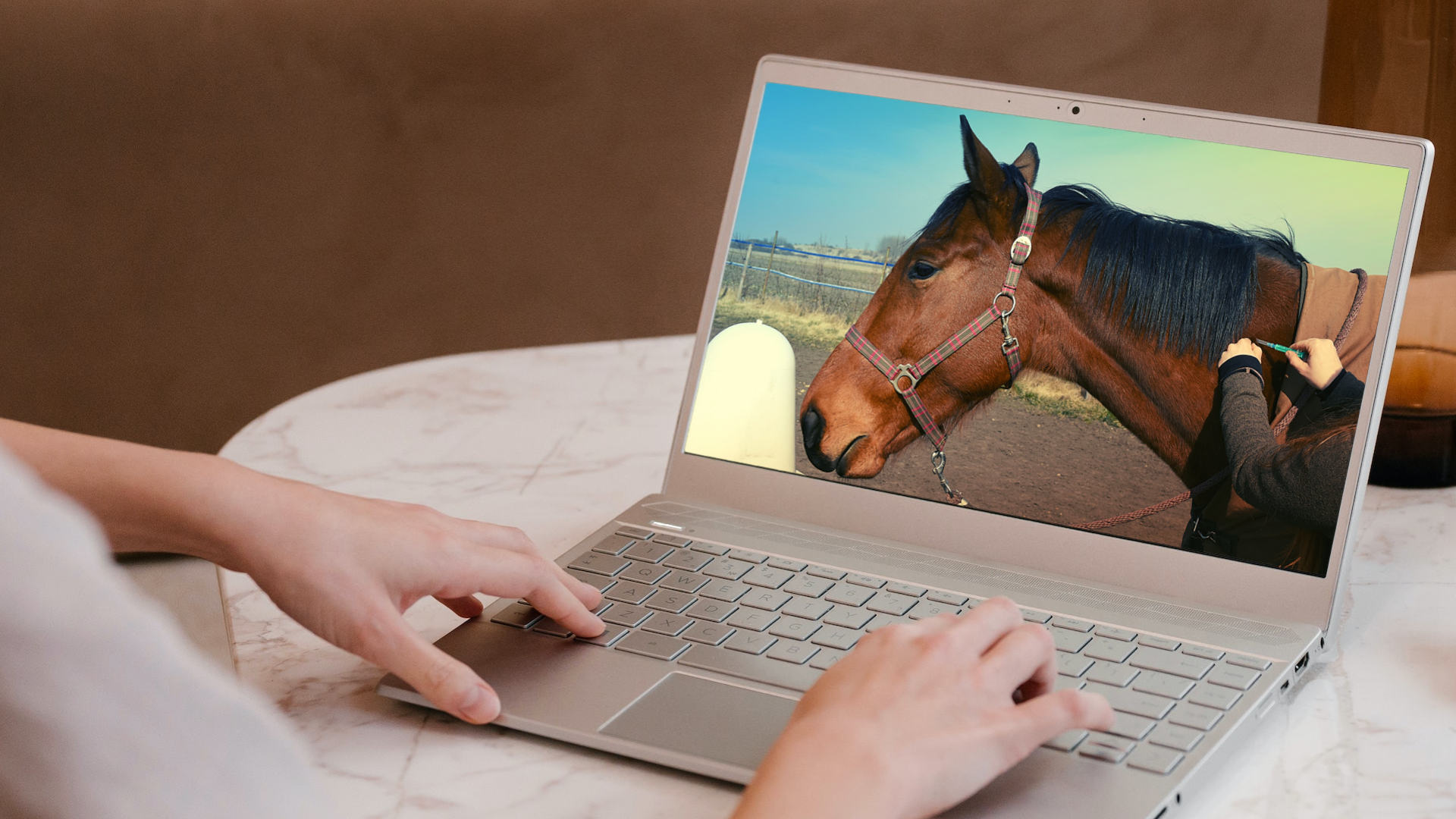
Every needle-shy horse is different
Maybe your horse is fine until they see the syringe.
Maybe the fear starts much earlier — when someone approaches their neck, when the vet enters the stable, or when they realise they are about to be restrained.
Maybe you’ve already tried treats, distraction, desensitisation or practising neck touch...
and you’re still not sure whether you’re doing the right thing.
You don’t need another generic needle-shyness protocol.
You need to understand your horse.
Online consultation
A personalised 60-minute consultation with an equine veterinarian and cooperative care trainer to help you understand your horse’s needle-shyness, find the right place to start, and create a practical plan for moving forward.
Includes pre-consultation assessment + optional video review + your personalised action plan.
You’ve read the advice. But your horse didn’t read the textbook.
You´ve read articles, you´ve watched videos, you´ve probably gotten some unsolicited advice, too...
You can find plenty of information online about helping needle-shy horses:
Desensitise them
- Use food
- Practise touching the neck
- Teach a start button
- Use positive reinforcement
And yes — these can all be valuable tools. But which one does your horse need? And perhaps even more importantly: Where should you start?
Because the horse who becomes slightly tense when their neck is pinched needs something very different from the horse who panics when the vet walks through the door.
A horse with one frightening experience behind them may need a different approach from a horse who has spent years learning that injections mean restraint, fear and loss of control.
And sometimes the problem you're trying to solve isn't actually where the problem begins.
That’s why this consultation isn't about giving you another standard protocol.
It’s about investigating the whole picture and finding an approach that makes sense for the horse standing in front of you.
Before you decide to train, you need to understand the problem (and your horse)
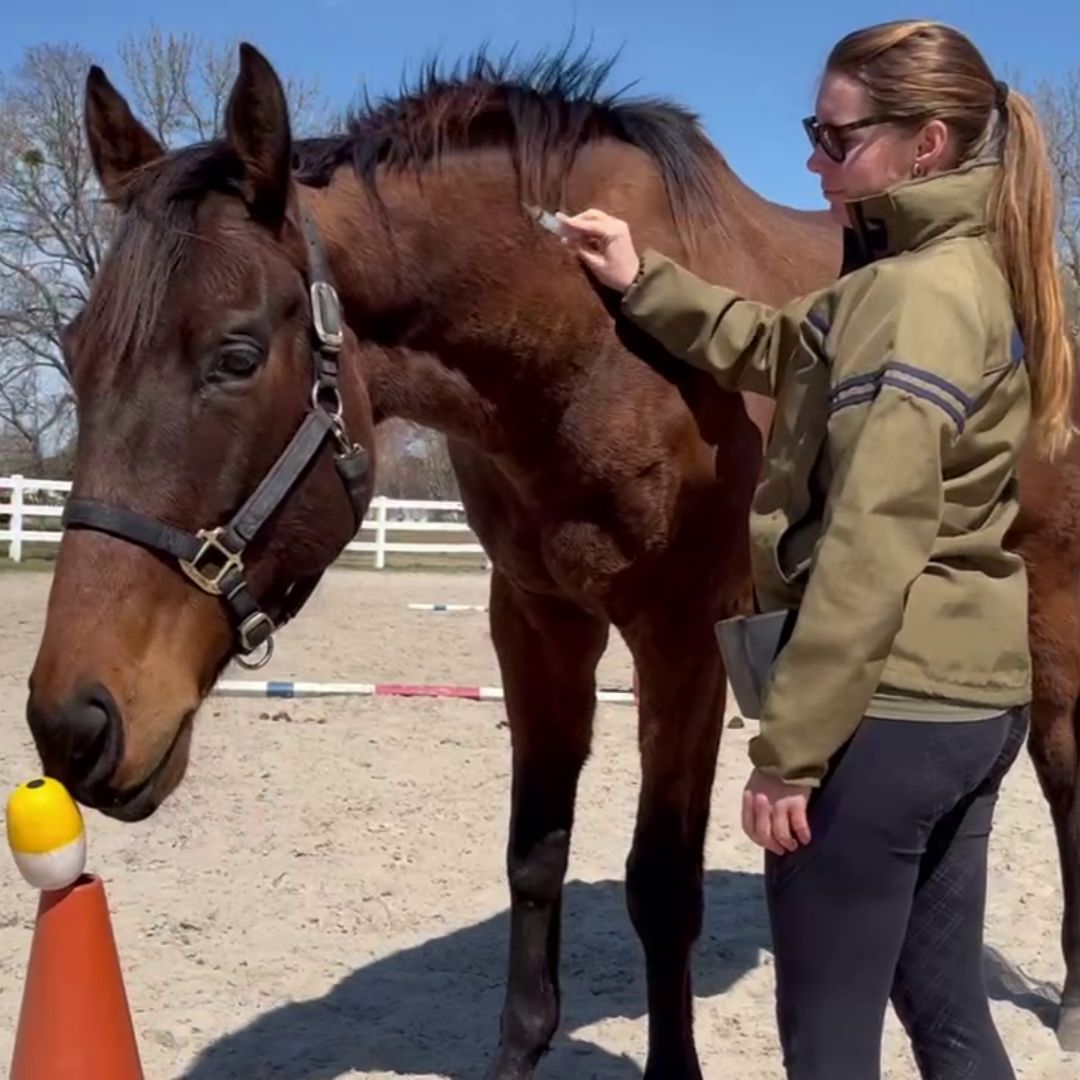
Needle-shyness isn't simply a behaviour we need to stop.
When a horse moves away, raises their head, freezes, barges, rears, or tries to escape, you need to know:
What happens before that?
Where does the first subtle tension appear?
What predicts the procedure?
What has the horse learned from previous experiences?
What can they already do comfortably?
Where do they lose their sense of safety?
What happens when they try to say “No”?
And what have you already tried?
Because once we understand why the behaviour is happening and where the difficulty begins, we can make much better decisions about what to do next.
We don't treat the symptom. We investigate the system.
Here’s how your Online Consultation works
1. Tell me about your horse
After booking, you'll complete a short questionnaire about your horse, their needle-shyness, relevant history, what happens during injections, what you've already tried, and what you would like to achieve.
That means we don't have to spend the first half of our consultation gathering basic information.
I can come prepared.
2. Show me what you're seeing
You can also send me one video of up to 10–15 minutes before our meeting.
This is optional.
Please don't deliberately provoke your horse's fear or recreate an unsafe situation just so I can see it.
A video of your existing training, handling, or another relevant interaction can often tell me plenty.
I'll review your information and video before we meet.
3. We meet for 60 minutes online
This is where we put the pieces together.
We'll talk about what I see, explore what may be contributing to your horse's response, identify your priorities, and decide where your training should begin.
Depending on your horse, we may discuss things such as stress and fear, learning history, thresholds, handling, desensitisation, counter-conditioning, positive reinforcement, consent, start buttons, or preparation for the real veterinary procedure.
But we won't use a technique simply because it's popular.
We'll choose what makes sense for your horse.
4. You leave with a plan
The goal is not to overwhelm you with everything you could possibly do.
It's to make the next steps clear.
After our consultation, you'll have a concise personalised action plan summarising:
where to start → what to prioritise → what to practise → what to watch for → when you're ready to progress.
So instead of closing Zoom thinking...
“That was interesting.”
I want you thinking:
“I know what I'm going to do with my horse tomorrow.”
This consultation is for you if:
- Your horse is worried, avoidant, or fearful around needles or injections
- Perhaps the problem is relatively new, and you want to address it before it becomes bigger
- Or perhaps you're dealing with established needle-phobia and don't know how to begin rebuilding your horse's confidence
You may already have tried training on your own but feel stuck.
You may be completely new to cooperative care.
You may simply want an experienced pair of eyes to look at what you're doing and tell you what I would change and why.
You do not need previous experience with positive reinforcement or cooperative care.
And your horse does not need to be at a particular stage of training.
We start where the two of you are.
What I won’t promise you:
I won't promise to “fix” your needle-phobic horse in 60 minutes.
Fear doesn't work like that.
For some horses, a relatively small change in training can make an enormous difference.
For others — particularly horses with strong, established fear responses or a long history of difficult procedures — rehabilitation takes time.
What I can do in one consultation is help you stop guessing.
We can identify what seems to be happening, find an appropriate starting point and create a strategy based on your horse rather than a generic protocol.
And sometimes, clarity about the right first step is exactly what changes everything that follows.
You don’t have to wait until the next injection goes wrong
In fact, the best time to work on needle-shyness is when you don't urgently need to give an injection.
- When there is no vet waiting.
- No vaccination that has to happen.
- No pressure to “just get it done.”
That's when we have room to listen, experiment, make things easier, and allow your horse to learn.
So if you've been thinking:
“I know we need to work on this before the vet comes again...”
This is your opportunity to start.
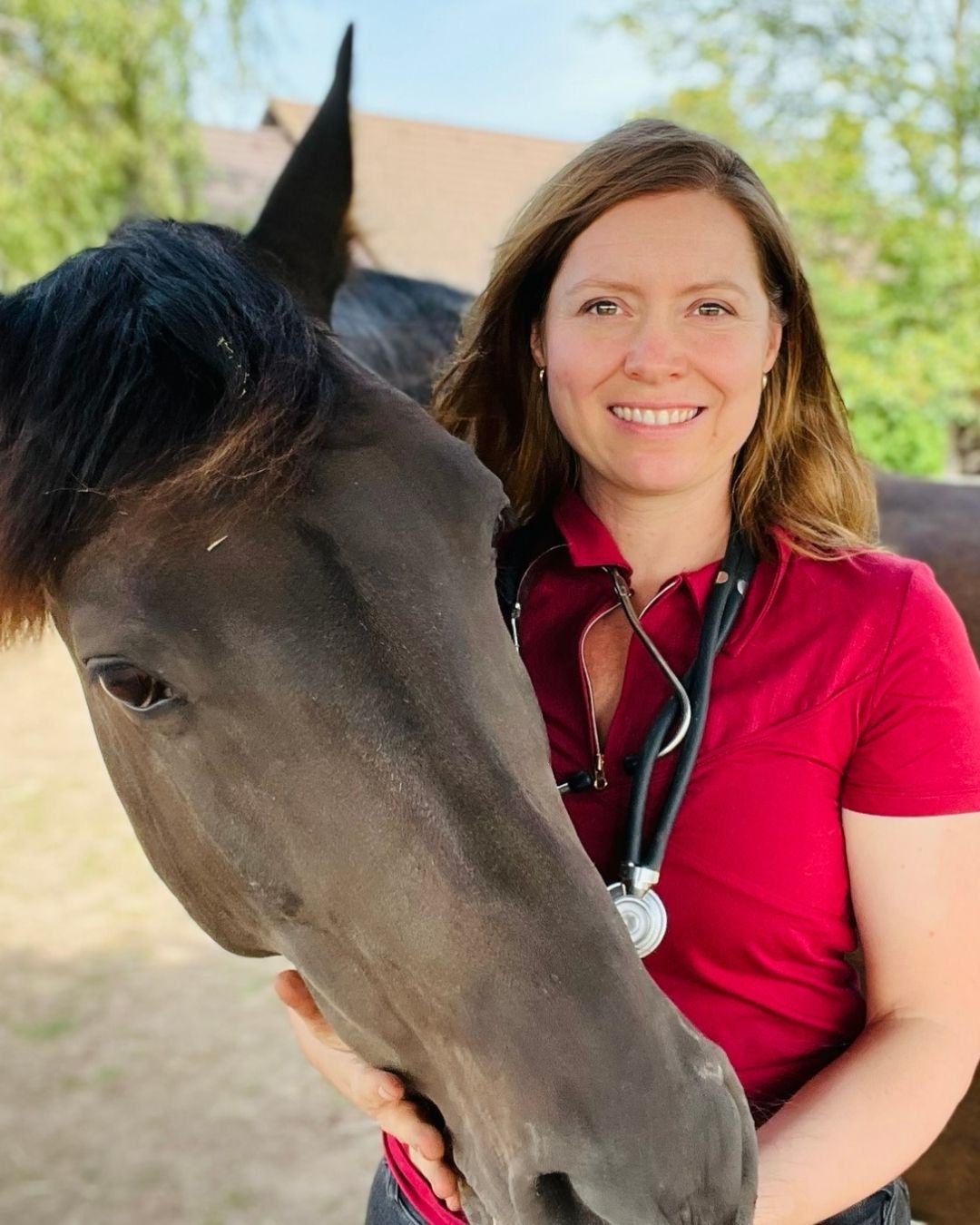
Hi, I’m Katerina,
an equine veterinarian, cooperative care trainer, and founder of The Cooperative Equine.
My work sits at the intersection of veterinary medicine, equine behaviour, learning, and the human-equine relationship.
And that perspective matters when we're dealing with needle-shyness.
Because I don't only want to know whether a training technique can make a horse stand still.
I want to understand what the horse is experiencing.
I want us to recognise stress before it becomes an explosion.
I want training to make veterinary care safer and easier without sacrificing the horse's sense of safety to achieve it.
And ultimately, I want healthcare to become less of something we have to do to our horses...
and more of something they can learn to participate in with us.
When they feel safe, we are safe.