Cooperation isn´t something we ask for.
It´s something we cultivate.
When I started this project, originally named VetCareTraining in 2018, my goal was simple:
To help horse owners and equine professionals handle their horses more safely, more easily, and more ethically during veterinary and husbandry procedures.
As a veterinarian, I had seen too many horses struggle — frightened during injections, restrained during procedures, often misunderstood, labeled “difficult,” and treated as the “difficult” horses - with a lot of force and punishment. I believed we could do better. And I had discovered something powerful:
- That we could train horses to participate in their own care.
- That we could use force-free, consent-based methods to reduce fear and build trust.
- That we could create a system where horses don’t just tolerate care, but choose to cooperate.

Practicing & teaching equine cooperative care for over 10 years, here´s what I learned:
- Cooperative care has a lot more benefits than just getting our horses (mules, donkeys...) ready for a vet or a farrier
- It helps strengthen the human-equine relationship, build trust, and understand our horses better
- Being prepared for basic healthcare procedures should become an essential part of every horse´s education because it can save their life one day
But...
...when working with my clients, I would notice similar patterns & similar points where they were getting stuck. Some part of the big picture was clearly missing…
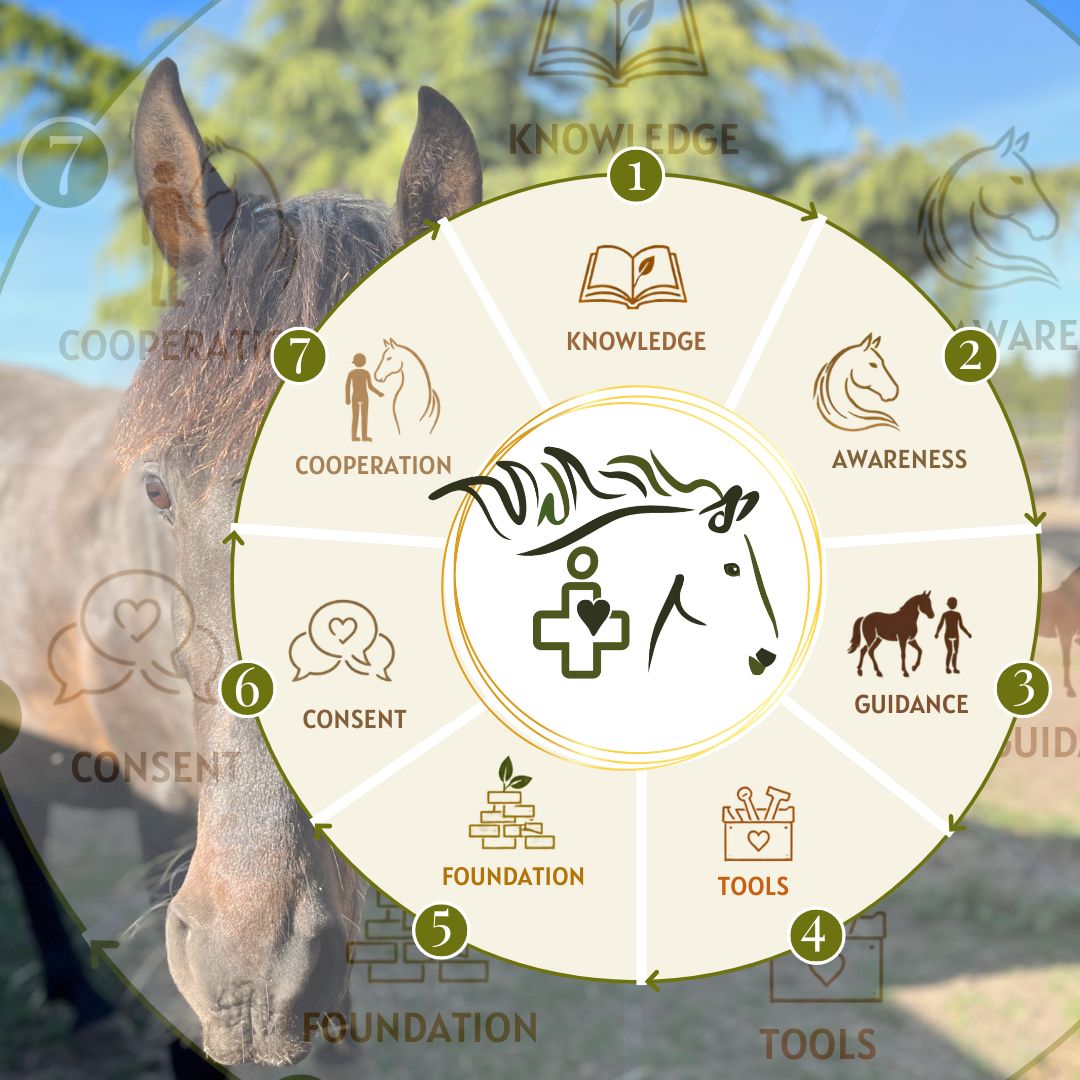
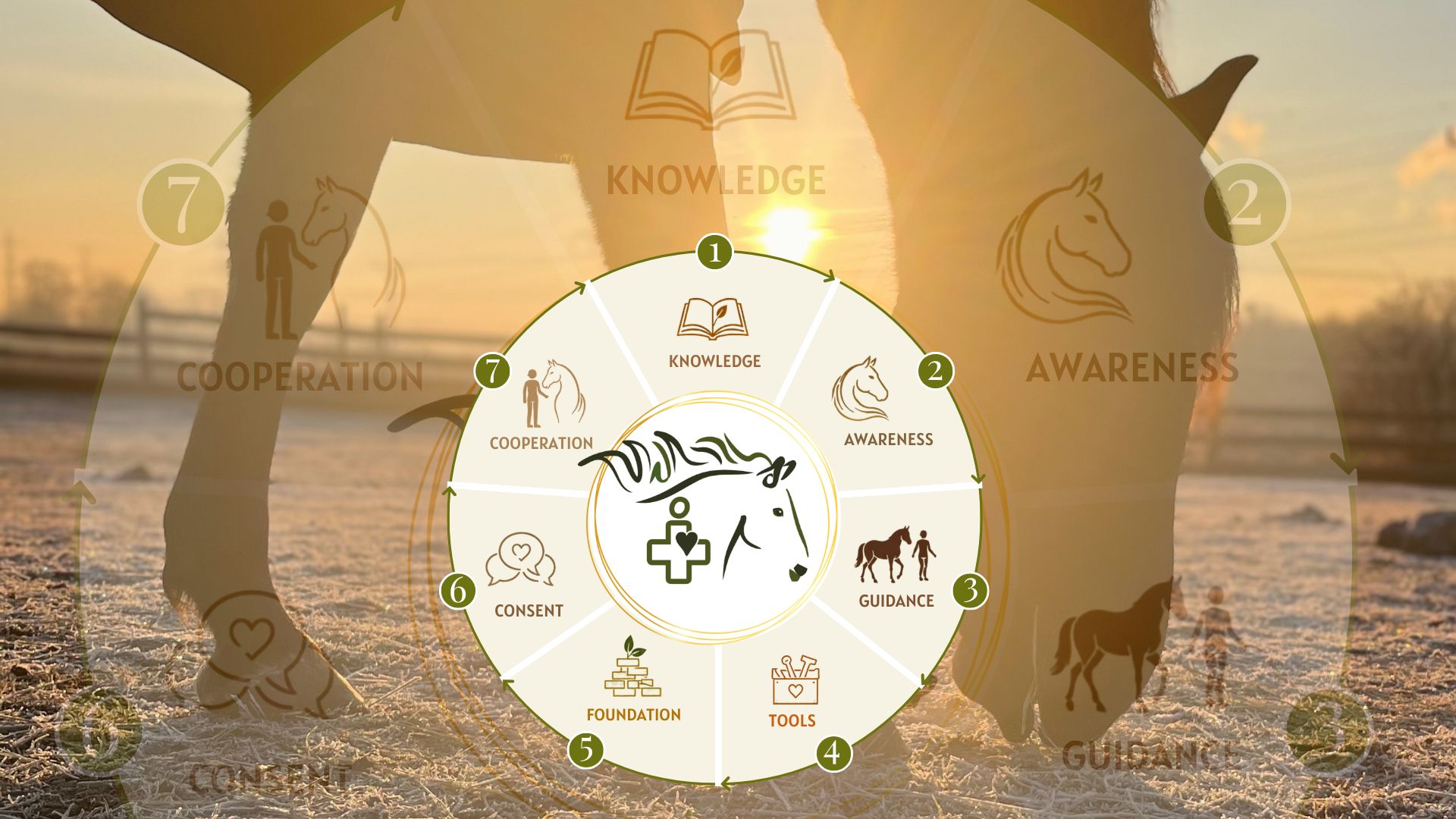
It made me realize I needed to change the way I was teaching equine cooperative care. Asking for consent & getting cooperative behaviours are the final steps, not the first ones. Cooperation is the result of several steps taken before, rather than a separate skill to be trained. If you skip these steps, you will keep having setbacks, and you will not know where they are coming from.
That led me to create The Human-Equine Cooperation Framework™, which offers a more holistic approach.